As businesses expand, managing finance, inventory, procurement, manufacturing and sales through disconnected systems can create operational bottlenecks. Limited visibility, duplicate data and manual processes often slow down decision-making and restrict scalability. This is why choosing the right Enterprise Resource Planning (ERP) system has become a strategic priority for modern businesses.
MetaLogic Digital helps businesses embrace smarter, connected operations through ERP implementation, system integration and business automation solutions. From SAP Business One on HANA and Odoo to integrated business applications, the focus is on simplifying complex workflows, improving operational visibility and creating scalable technology infrastructure.
Multiple technology providers, each with industry-specific features and platforms, make the selection quite tricky. In this article, we bring you the list of the top 10 ERP software companies in India, along with their technical features, ERP solutions, and business applications to help you make this decision.
What Is ERP Software and How Does It Work?
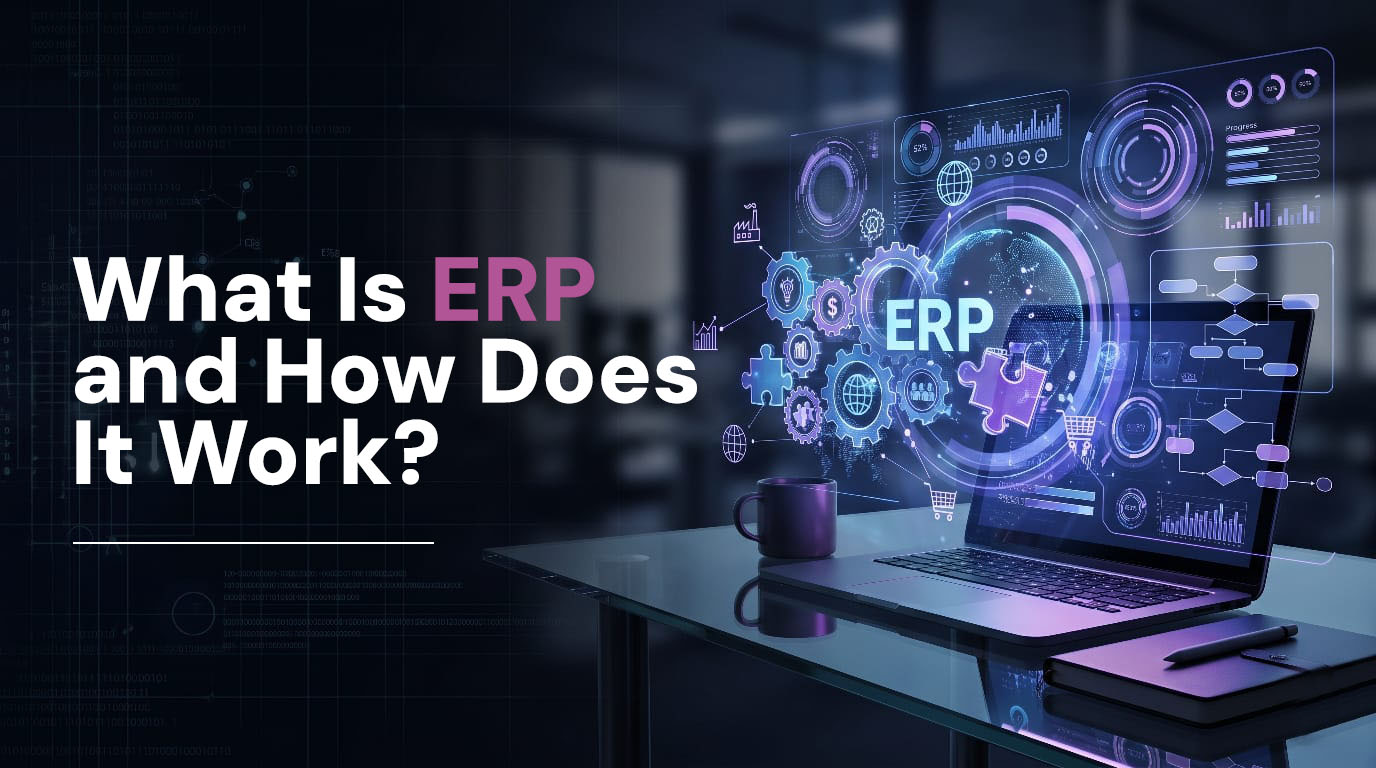
ERP is a system of integrated software packages for business use, including accounting, manufacturing, shipping, and other functions.
Instead of maintaining separate systems for accounting, inventory, purchasing, sales and production, businesses can manage these operations through a single platform.
An ERP system usually functions through independent modules that communicate with each other in real time. For example, when a sales order is approved, the following modules will automatically run: update stock, generate purchase orders, issue invoices, and record accounting entries.
Also Read: What Is ERP (Enterprise Resource Planning) and How Does It Work?
Technical Features of ERP Software
- Centralised Database System
The ERP system contains an integrated database that provides all departments with access to accurate business information. This is achieved through role-based access control.
- Workflow Automation
Automated workflows manage repetitive activities such as purchase approvals, invoice generation, order processing, stock replenishment and financial reconciliation.
- Module-Based Architecture
Businesses can implement modules according to their operational requirements, including finance, inventory, CRM, manufacturing, procurement, HR and warehouse management.
- API and Third-Party Integrations
Contemporary ERP systems integrate with CRM, ecommerce, payment gateways, logistics, and banking systems, as well as BI solutions, via APIs and integration systems.
- Reporting and Business Intelligence
Integrating dashboards provides insight into the performance of operations, finances, inventory, and production, as well as the overall profitability of the business.
Also Read: Significance of ERP in the Garment Manufacturing Process
Top 10 ERP Software Companies in India
The firms listed below, along with their software systems, are leading ERP software providers. It is not a market-share ranking; however, the list reflects the editor’s choice. The applicability will vary depending on the company’s size and industry requirements.
1. MetaLogic Digital: Integrated ERP and Business Automation Solutions.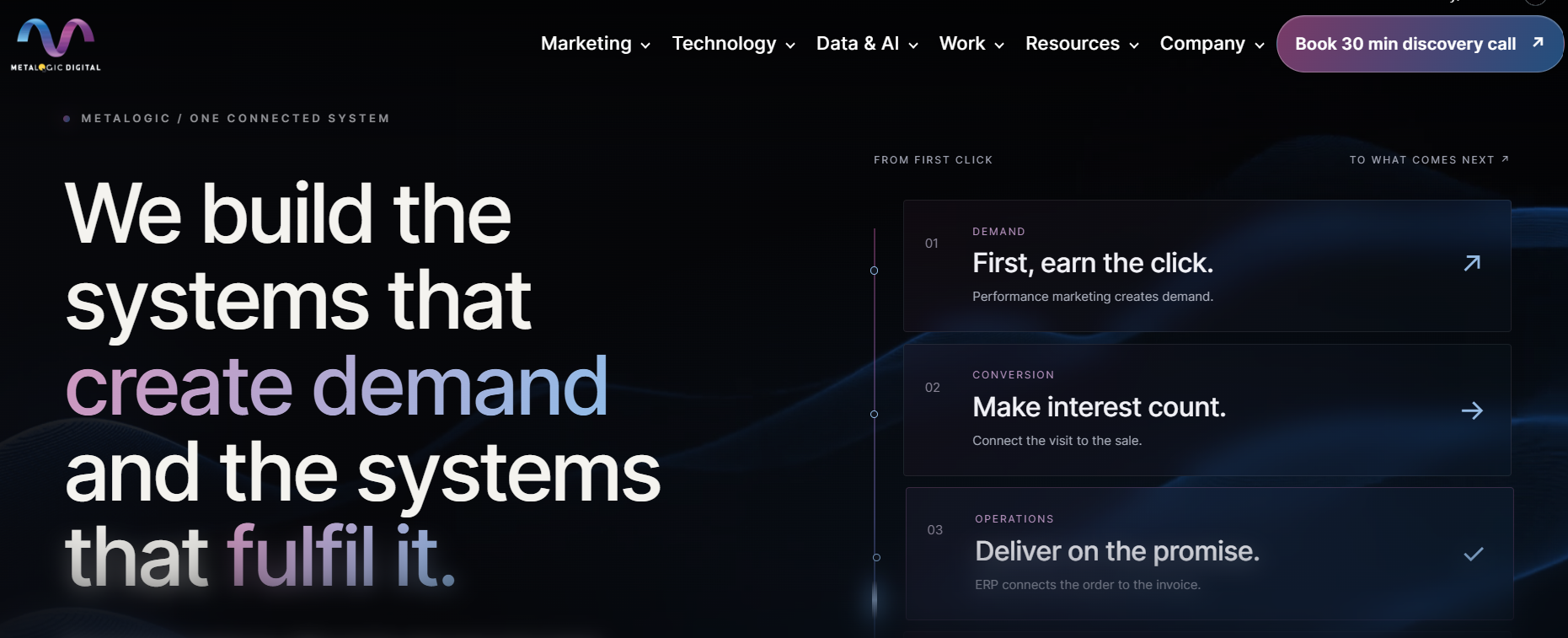
MetaLogic Digital Marktech Company specialising in Business Automation and ERP Business Automation Digital Business Transformation Enterprise Application Development Business Operations Processes Connectivity Business Automation by MetaLogic Digital MetaLogic Digital…
Rather than treating ERP as an isolated software installation, MetaLogic Digital approaches implementation as part of a broader business technology ecosystem. The objective is to connect finance, inventory, procurement, sales, manufacturing and warehouse operations through structured workflows and integrated systems.
Its ERP capabilities include SAP Business One on HANA, Odoo, Tally integration and custom business application development, depending on business requirements.
Key Technical Capabilities:
- SAP Business One on HANA: Integrated enterprise management, financial control, inventory visibility and operational reporting.
- Odoo ERP Implementation: Modular ERP configuration, business process customisation and application integration.
- Financial Management: Accounting workflows, financial reporting and transaction management.
- Inventory and Warehousing: Stock control, warehousing activities, material movement and inventory management.
- Manufacturing Management: Manufacturing processes, Bills of Material, materials requirements and shop floor flows.
- Sales and Distribution: Sales order processing, procurement coordination and distribution management.
- API and System Integration: Connecting ERP platforms with external applications, websites and business systems.
- Business Automation: Reducing repetitive manual activities through structured workflows and automated processes.
- Application Maintenance: Ongoing technical support, system updates and ERP maintenance.
Best Suited For: Small and mid-sized businesses, manufacturers, distributors and growing enterprises looking to streamline operations through integrated ERP platforms and business automation.
With an emphasis on implementation, integration and operational efficiency, MetaLogic Digital helps businesses build connected technology systems that support long-term growth.
2. Oracle Advanced Cloud ERP Infrastructure
Oracle provides enterprise resource planning solutions designed to manage complex financial, procurement, project management and supply chain operations.
Oracle Fusion Cloud ERP offers cloud-based enterprise applications, while Oracle NetSuite provides an integrated cloud ERP platform for growing and multi-entity businesses.
Key Technical Capabilities:
- Cloud-based financial management.
- Enterprise procurement automation.
- Supply chain and inventory management.
- Project accounting and performance management.
- Multi-entity financial consolidation.
- Advanced reporting and analytics.
- Integration with enterprise applications.
Best Suited For: Large enterprises, multinational businesses and organisations managing multiple business entities or complex financial operations.
3. Microsoft: Dynamics 365 ERP Solutions
Microsoft Dynamics 365 combines ERP and CRM capabilities to support connected business operations.
Its ERP applications include Dynamics 365 Finance, Supply Chain Management and Business Central. These platforms help organisations manage financial processes, procurement, inventory, manufacturing and business reporting.
Key Technical Capabilities:
- Money management and budgeting.
- Supply chain planning and inventory management.
- Making and warehousing, inventory management.
- Automation of sales and procurement.
- Power BI Connection to Microsoft 365.
- Workflow automation through Power Platform
- Cloud-based business intelligence.
Best Suited For: Growing businesses and enterprises already operating within the Microsoft technology ecosystem.
4. Odoo: Modular and Customisable ERP Software
Odoo is an open-source-based business application platform offering a modular ERP ecosystem. Businesses can select applications according to their operational requirements and expand the system as their needs evolve.
Its applications cover accounting, CRM, sales, purchasing, inventory, manufacturing, human resources, e-commerce and project management.
Key Technical Capabilities:
- Modular application architecture.
- Inventory and multi-warehouse management.
- Bill of Materials (BoM) and manufacturing workflows.
- Automated purchase and sales processes.
- Accounting and financial management.
- API-based integrations.
- Custom module development and workflow configuration.
Best Suited For: Start-ups, SMEs, manufacturing businesses, retailers and organisations seeking flexible ERP configurations.
Also Read: Best Digital Marketing Agencies in Bangalore
5. Tally Solutions: Accounting and Business Management
Tally Solutions is an established Indian software provider known for TallyPrime, which supports accounting, inventory and business management requirements.
Although primarily recognised for accounting and financial management, TallyPrime also offers inventory, taxation, payroll and business reporting capabilities.
Key Technical Capabilities:
- GST accounting and reporting.
- Financial statements and ledger management.
- Inventory and stock tracking.
- Sales and purchase management.
- Banking and reconciliation.
- Payroll management.
- Business data synchronisation and integration options.
Best Suited For: Small businesses, traders, retailers and organisations prioritising accounting and inventory management.
6. Zoho : Cloud-Based Business Management Solutions
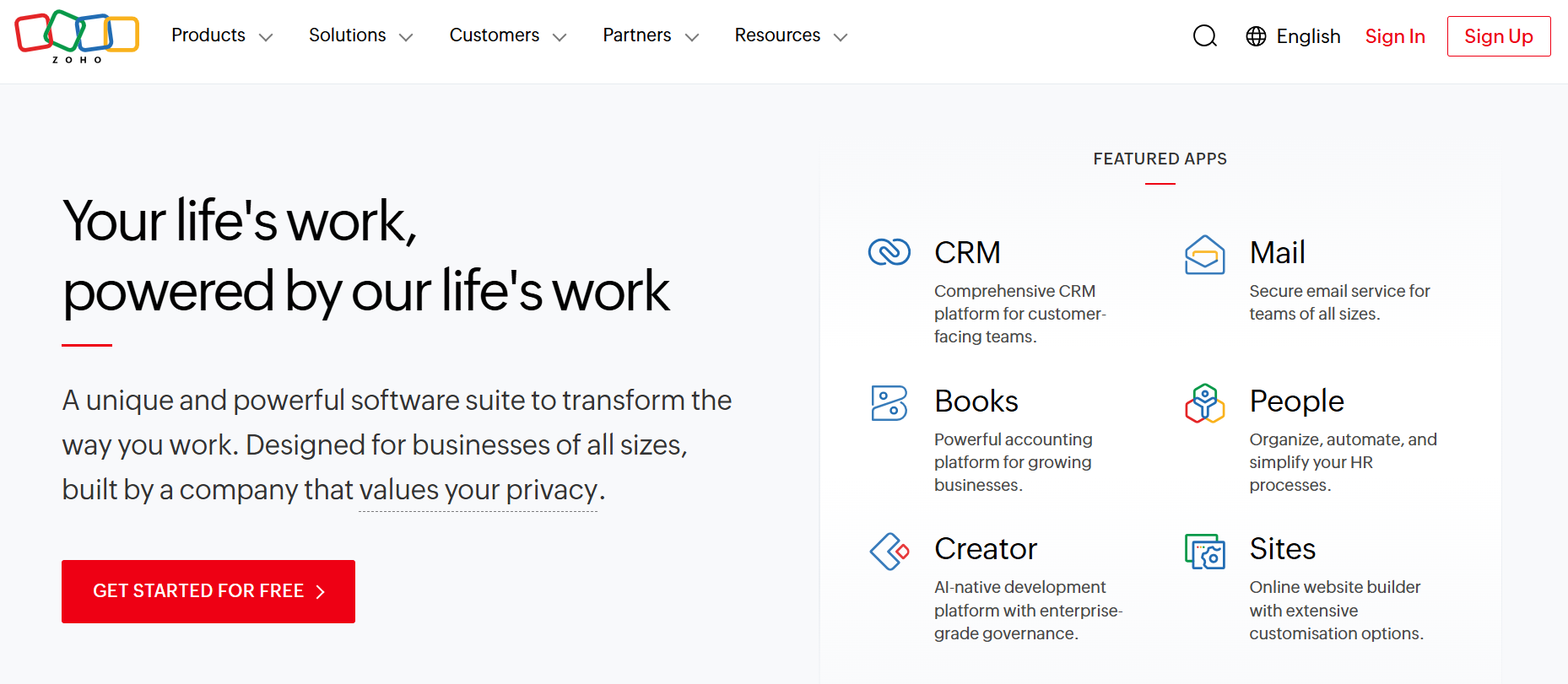
Zoho provides a connected ecosystem of cloud applications that support finance, sales, inventory, customer management and business operations.
Through applications such as Zoho Books, Zoho Inventory, Zoho CRM and Zoho Creator, businesses can connect essential workflows and build integrated operational processes.
Key Technical Capabilities:
- Cloud-based financial management.
- Inventory and order management.
- Customer relationship management.
- Workflow automation.
- Custom application development.
- API-based integrations.
- Business analytics and reporting.
Best Suited For: Start-ups, small businesses and growing organisations looking for connected cloud applications.
7.
Infor manufactures enterprise application software that is specific to industries and designed to meet the operational needs of those industries.
Its CloudSuite portfolio provides industry-specific ERP capabilities with cloud deployment options.
Technical Competencies:
- Domain-specific workflow for businesses.
- Planning and manufacturing operations.
- Management of supply chains.
- Inventory and distribution management.
- Financial management.
- Operational analysis.
- Enterprise applications in the cloud.
Best Suited For: Manufacturing enterprises, industrial organisations, distributors and businesses with specialised operational workflows.
8. Epicor : ERP for Manufacturing and Distribution
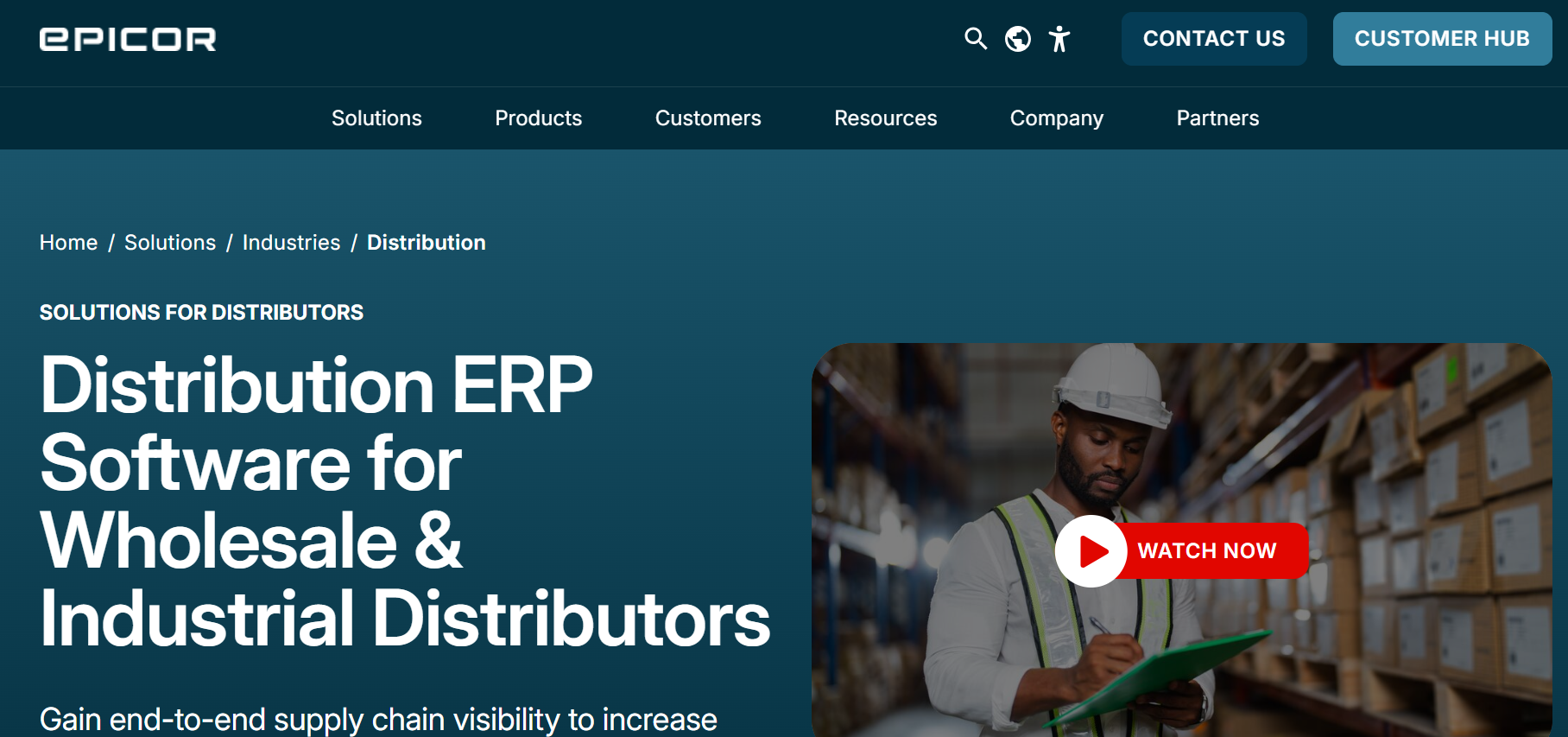
Epicor provides ERP software designed to support manufacturing, distribution and supply chain operations.
Epicor Kinetic is particularly focused on manufacturing environments, helping businesses coordinate production activities, materials, inventory and financial processes.
Technical capabilities include the following:
- Scheduling & Planning.
- Materials Requirements Planning.
- Bills of Materials.
- Shop Floor Control.
- Inventory & Warehouse Management.
- Supply Chain Visibility.
- Manufacturing performance reporting.
Best Suited For: Discrete manufacturers, industrial businesses, automotive suppliers and distribution companies.
9. Ramco Systems : Enterprise Cloud ERP
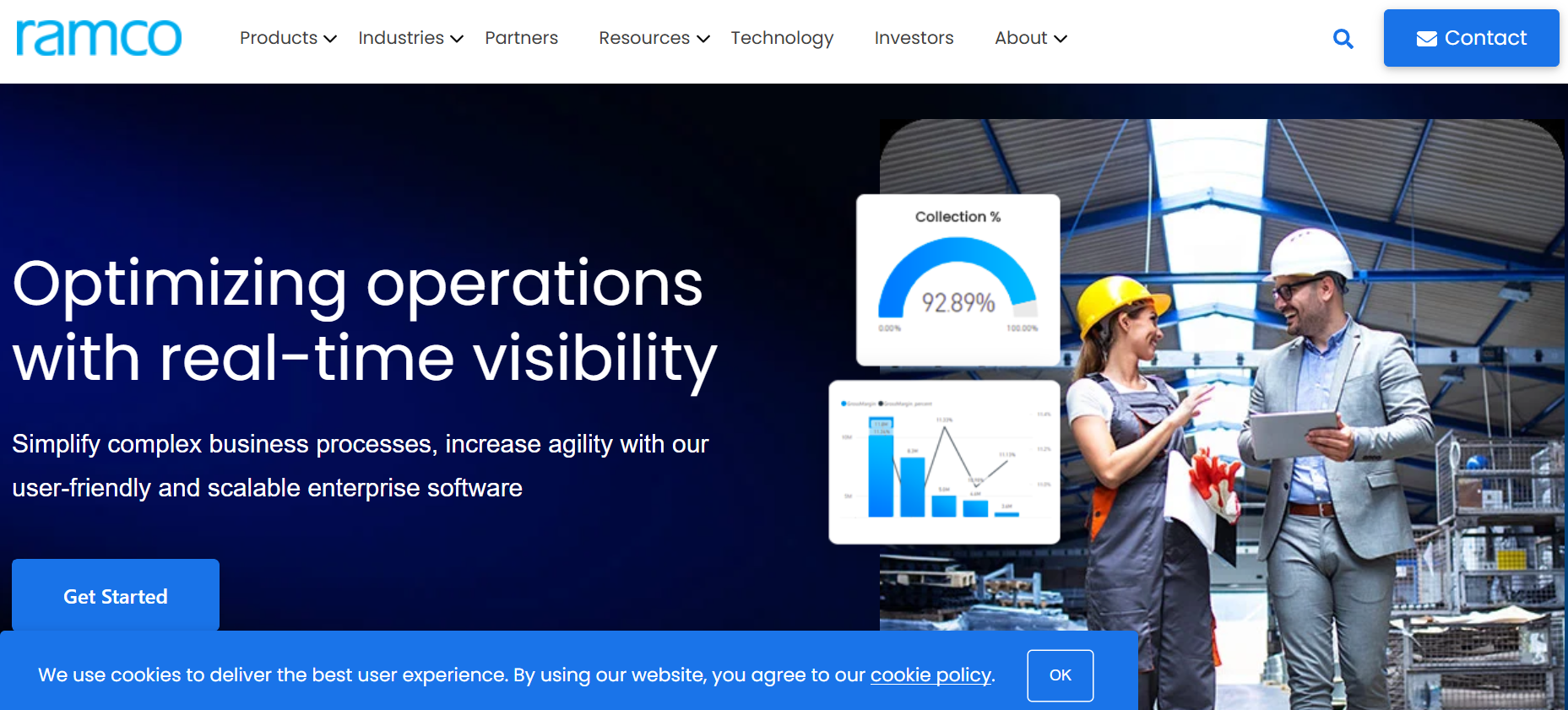
Ramco Systems is an Indian enterprise software company offering cloud-based ERP and specialised business applications.
Its solutions support industries requiring integrated enterprise management, including aviation, logistics, manufacturing and human capital management.
Key Technical Capabilities:
- Enterprise financial management.
- Supply Chain and Procurement Management.
- Manufacturing and Asset Management.
- Human Capital Management.
- Logistics and Operational Planning.
- Application Architecture based on Cloud Computing.
- Business Process Automation.
Best Suited For: Large organisations, logistics providers, aviation businesses and companies with complex enterprise operations.
10. SAP : Enterprise-Grade ERP Solutions
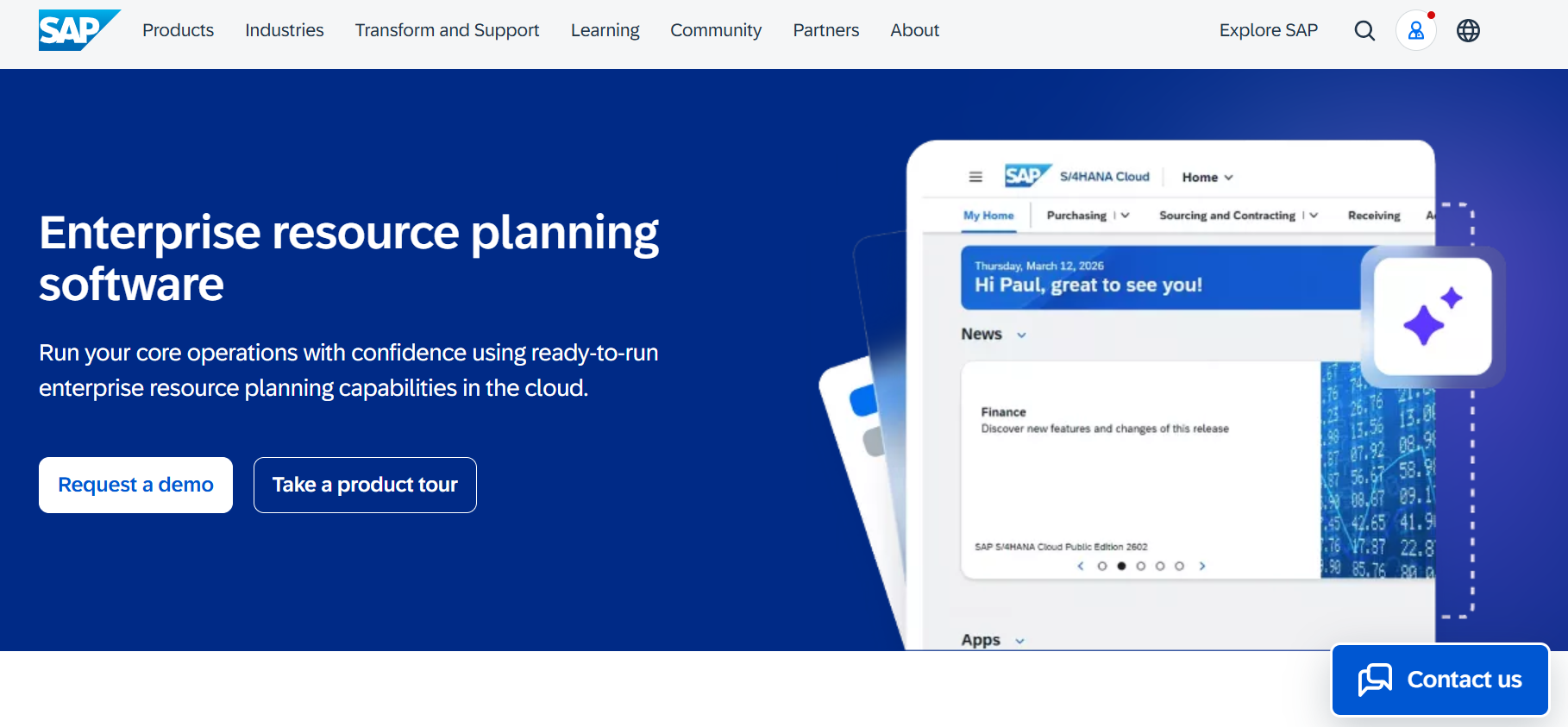
SAP is a globally recognised enterprise software provider offering comprehensive ERP platforms for businesses with complex operational requirements.
The company’s range of ERP products include SAP S/4HANA and SAP Business One. Though SAP S/4HANA caters to the needs of large organizations, SAP Business One is meant for small and medium sized companies.
Important technical skills include:
Financial accounting and management reporting systems.
Material requirements planning (MRP).
Production planning and inventory control.
Procurement and vendor management.
Warehousing and logistics management.
Real-time analytics and enterprise reporting.
Integration with third-party business applications.
Best Suited For: Manufacturing companies, large enterprises, distributors and organisations requiring structured financial and operational management.
Also Read: Article Schema: Types, Best Practices, and How to Use It
Comparison of the Top ERP Software Companies in India
Selecting an ERP provider requires more than comparing brand names. Businesses must evaluate platform capabilities, deployment models, customisation options and industry suitability.
ERP Company | ERP Platform | Primary Application |
MetaLogic Digital | SAP Business One, Odoo and integrated ERP solutions | ERP implementation and business automation |
Oracle | Fusion Cloud ERP, NetSuite | Financial and enterprise operations |
Microsoft | Dynamics 365 | Finance and supply chain |
Odoo | Odoo ERP | Modular business management |
Tally Solutions | TallyPrime | Accounting and inventory |
Zoho | Zoho business applications | Cloud business operations |
Infor | CloudSuite | Industry-specific ERP |
Epicor | Kinetic | Manufacturing and distribution |
Ramco Systems | Ramco ERP | Enterprise and industry operations |
SAP | S/4HANA, Business One | Enterprise Management |
Essential ERP Modules Every Indian Business Should Consider
The right ERP system should address the actual operational requirements of an organisation. While module requirements differ across industries, the following components are particularly important.
1. Financial Management
A financial management module centralises accounting, accounts payable, accounts receivable, general ledger, budgeting and financial reporting.
Indian businesses should evaluate support for GST-related workflows, tax reporting, TDS requirements, e-invoicing and applicable statutory processes.
2. Inventory and Warehouse Management
Inventory management ensures that you have real-time information regarding inventory availability, warehouse location, material flow, and reordering needs.
Capabilities of importance would be:
- Multi-warehouse stock control.
- Batch and serial number control.
- Integration with barcodes and QR codes.
- Stock valuation and reconciliation.
- Reorder point setting.
- Goods receiving and dispatch control.
3. Manufacturing and Production Planning
Manufacturing ERP modules help organisations manage production schedules, raw materials, work orders and finished goods.
Features such as Bill of Materials, MRP, capacity planning, production routing and quality control improve coordination across manufacturing operations.
4. Procurement and Vendor Management
Procurement systems streamline procurement request forms, approvals, purchase orders, vendor master file and receipt of materials procedures.
This helps increase purchasing visibility, streamlines manual coordination, and improves supplier management.
Also Read: How To Rank Your Website On AI Platforms Like ChatGPT And Gemini
5. Sales and Distribution Management
The sales and distribution modules integrate customer orders, prices, dispatching, billing, and delivery processes.
Companies can control the entire order-to-cash process and monitor sales activities and receivables.
- Business Intelligence and Reporting
ERP analytics converts your business data into business intelligence.
Dashboards and reports can track:
- Income and gains.
- Stock turnover.
- Efficiency Production.Procurement performance.
- Order fulfilment rates.
- Cash flow and working capital.
Integrating ERP data with platforms such as Power BI can further improve management reporting and decision-making.
How to Choose an ERP Software Company in India
To choose from the top ERP software vendors in India, one must do a technical and operational evaluation.
- Understand Your Business Needs
Know your process flow, issues, reporting needs, and departmental needs prior to choosing an ERP system.
A manufacturing firm would have MRP and production planning as their prime need while a distribution company would want multi-warehouse operations.
2. Evaluate the technical architecture.
Does the ERP system support cloud deployment, on-premise installation, or both?
Consider database architecture, application performance, scalability, system availability, data security and disaster recovery capabilities.
3. Check Customisation and Integration Capabilities
The ERP system should accommodate essential business workflows without introducing unnecessary complexity.
Evaluate API and integration capability/custom modules, third-party integrations, and functionality to understand how well they have integrated applications.
- Assess the Indian Compliance Needs
Check whether the ERP software complies with all required Indian accounting standards and systems, such as GST, e-invoicing, e-way bill, TDS, and payroll.
Do not assume that every ERP configuration includes all compliance features by default.
5. Analyse Total Cost of Ownership
ERP investment extends beyond software licensing.
Evaluate implementation charges, customisation, data migration, infrastructure, training, integrations, annual maintenance and future upgrades.
6. Assess Implementation and Support Capabilities
An ERP platform is only as effective as its implementation.
Review the provider’s technical expertise, project methodology, documentation, testing procedures, user training, post-deployment support and experience with similar business processes.
Why Companies Opt for MetaLogic Digital for Their ERP Systems?
Deployment of ERP systems cannot be equated to just another business software implementation because it requires a comprehension of how information flows throughout various departments.
MetaLogic Digital approaches ERP implementation through business process analysis, system configuration, application integration and automation.
Its technology capabilities cover SAP Business One on HANA, Odoo, Tally and connected business applications.
Businesses can explore solutions covering:
- ERP Consulting & Implementation: how to design an ERP system architecture that meets operational needs.
- Business Process Automation: Automating approval processes and repetitive workflows.
- Manufacturing & Inventory Control: Linking production, purchasing, and warehouse management.
- Financial and Operational Reporting: Achieve better visibility with centralised business data.
- System Integration: Linking ERP with other programs and outside services.
- Technical Support and AMC: system up-time and support for the day to day operational requirement.
With ERP, digital transformation, data and AI, website development and business automation capabilities, MetaLogic Digital helps organisations create a more connected technology environment.
Build a More Connected Business with MetaLogic Digital.
Conclusion
The best ERP software companies in India offer different capabilities depending on business size, industry, technical requirements and operational complexity.
SAP and Oracle support organisations with extensive enterprise requirements, while Microsoft Dynamics 365, Odoo and Infor offer solutions for different business environments. Tally and Zoho address specific accounting and connected application requirements, while Epicor and Ramco cater to specialised operational needs.
However, selecting the right ERP platform is only one part of the process. Successful implementation requires accurate requirement analysis, structured data migration, effective integration, user training and continuous system optimisation.
MetaLogic Digital helps businesses bring these elements together through ERP implementation, business automation and integrated technology solutions.
Ready to streamline your business operations? Connect with MetaLogic Digital and explore ERP solutions designed around your business requirements.